
If you have filled a fuel tank, paid an energy bill, or checked a mortgage rate lately, you already know the global economy feels different than it did at the start of 2026.
Back then, the story was steady growth, cooling inflation, and central banks edging toward rate cuts. Today it is a war-driven energy shock, stubborn inflation, and interest rates moving up again. Yet growth has not collapsed. To understand where the world economy stands in late September 2026, you have to hold two ideas at once: it has proven tougher than many forecasters feared, and it is more fragile than the headline numbers suggest.
Global Growth: Slower, Not Broken

The International Monetary Fund’s July update projects global growth of 3.0 percent for 2026 and 3.4 percent for 2027, broadly unchanged from April on a cumulative basis. The fund describes an uneven picture. Energy-importing and vulnerable economies are absorbing the pain of the war, while countries plugged into the AI hardware supply chain get a boost. It also warned that the global slide in inflation has stalled. The US is holding up well, with growth projected at 2.3 percent in 2026.
It helps to remember how the year began. Before the war, the IMF was preparing to nudge its forecasts up. In April its chief economist said the conflict had stopped that momentum, cutting the outlook to 3.1 percent and lifting expected inflation to 4.4 percent. The fund also sketched a darker scenario in which growth falls to 2.5 percent. So far the world has landed closer to the mild end. In July, IMF officials said the economy had weathered the shock better than feared, crediting inventory drawdowns, extra production outside the Gulf, and a growing share of renewable energy. That verdict came in early July, though, and the Gulf has grown far more volatile since.
The Oil Shock at the Center of Everything
The source of the volatility is the conflict involving Iran and the Strait of Hormuz, a waterway that carries roughly a fifth of the world’s oil supply in peacetime. The International Energy Agency has reportedly called the resulting disruption the largest supply disruption in the history of the global oil market.
Prices have whipsawed accordingly. Brent crude surged to around $80 in the war’s first days and dropped back near $70 by July during a fragile lull. Renewed fighting changed that. Brent closed above $101 on September 9, then climbed past $107 after a drone attack shut Saudi Arabia’s East-West pipeline. It settled near $105 on September 17.
That pipeline matters because it was Riyadh’s main workaround, sending crude to the Red Sea while the Gulf route was choked. With it offline, Saudi output fell to its lowest level since 1990. Markets calmed a little when Saudi Arabia began shipping more crude through Hormuz via ship-to-ship transfers, and Aramco reportedly expects to restore half of the pipeline’s flow. Even so, traffic through the strait remains thin, with only four commodity vessels detected on one recent day. Goldman Sachs expects Middle East shipping disruptions to continue into 2027, with production recovering gradually in the second half of next year.
Inflation Is Back on the Agenda
Energy is feeding straight into consumer prices. US prices rose 0.4 percent in August, with gasoline 27.4 percent higher than a year earlier. Annual headline inflation held at 3.4%. Core inflation, which strips out food and energy, eased to its lowest level since March 2021, which suggests the oil shock has not yet spread through the whole economy. Policymakers remain wary, though. Monthly core prices rose a tick more than forecast, and officials still remember an earlier episode when inflation was dismissed as temporary before it hit 40-year highs.
So central banks have turned. On September 16 the Federal Reserve voted 12-0 to raise its key rate a quarter point to 3.75%–4%, its first hike in more than three years. Sixteen of eighteen officials see the possibility of at least one more increase this year. The labor market gives them cover. August payrolls grew by 162,000, far above the 53,000 economists expected, while unemployment held at 4.1 percent.
Europe is heading the same way from a weaker starting point. The European Central Bank raised its key rate to 2.50 percent on September 10, its second hike this year, as eurozone inflation reached 3.3 percent in August, its highest in three years. The ECB did nudge its 2026 growth forecast up to 0.9%, citing greater-than-expected resilience, but it says risks to growth remain tilted to the downside.
Bond Markets Are Sending a Warning
The clearest sign of stress is in government debt. The US 10-year Treasury yield rose above 4.81 percent in early September, its highest since November 2023, and more recent reports say it has crossed 5 percent. The move is global. Japan’s 10-year yield hit 3 percent for the first time since 1996, and Britain’s 10-year gilt yield reached about 5.25 percent, the highest since 2008.
Investors are pricing in oil-fed inflation, but more is going on. Analysts point to record US deficits, a surprisingly resilient economy, and a flood of bond issuance from AI companies borrowing heavily. For households and businesses, the result is costlier mortgages, loans, and government financing, and less room for error if something else goes wrong.
The AI Boom: The Counterweight
If the war is the drag, artificial intelligence is the engine pulling the other way. The IMF credits AI-driven demand with cushioning the global economy, and the trade data show why. South Korea’s semiconductor exports climbed 209 percent year over year in August, and China’s electronic equipment output soared more than 19 percent in July.
Investors largely stay convinced. A Bank of America survey found fund managers still overweight global equities and optimistic about earnings, and BlackRock says higher rates have not knocked it off its overweight in AI-related investments. The S&P 500 is trading around 7,700.
The risk is concentration. Much of the world’s resilience sits in a narrow set of sectors and countries, and the IMF says downside risks from renewed conflict and financial market repricing persist. If AI productivity expectations disappoint while borrowing costs stay high, the cushion could thin quickly.
China: Factories Humming, Households Hesitant
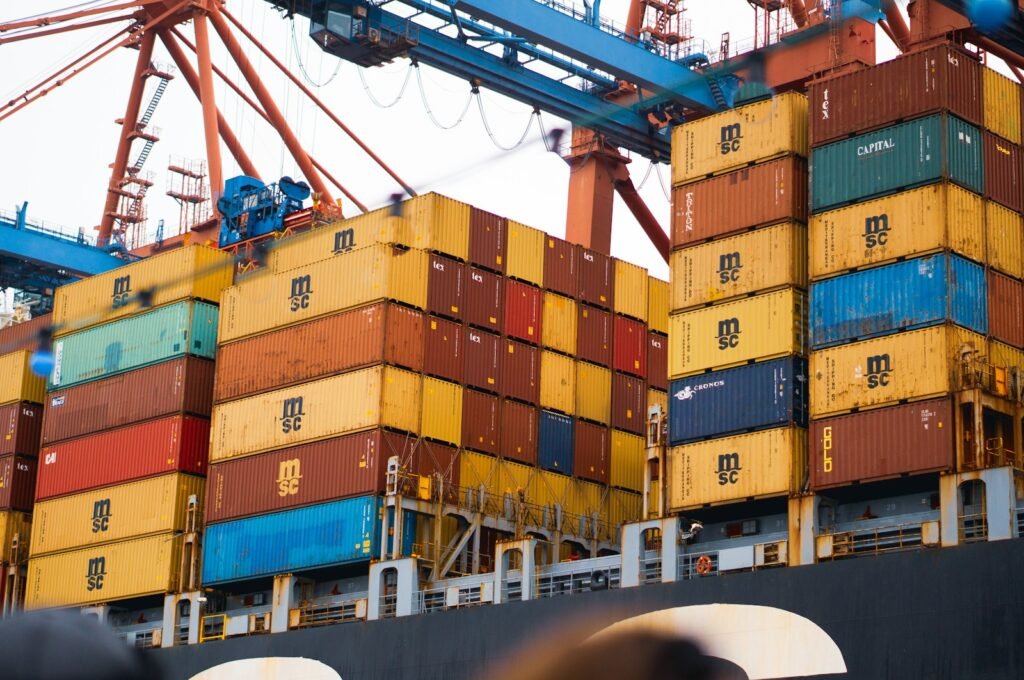
China shows the split better than any other economy. Growth eased to 4.3 percent in the second quarter, the slowest pace in over three years and below the 4.5 to 5 percent target. August data showed the same two-speed pattern. Industrial output expanded 5.2 percent and retail sales grew just 0.4 percent, while fixed-asset investment is down 7.2 percent for the year so far. Property is the main drag, with real estate development investment down 19.9 percent. Exports of mechanical and electrical products, meanwhile, rose 21.9 percent.
Analysts expect Beijing to hold back on major stimulus as long as export growth stays strong enough to keep the economy within its target range. For the rest of the world, that means China remains a supplier of manufactured goods and tech hardware rather than a driver of global consumer demand.
The Countries and Households Feeling It Most
The burden is not evenly shared. Low-income and developing economies with limited buffers are likely to be hit hardest, Gulf exporters face damaged infrastructure and weaker tourism, and remittances will fall in countries that supply migrant workers to the region. For ordinary households everywhere, the pain arrives as pricier fuel, more expensive travel, and higher borrowing costs.
Even wealthy economies show the strain. Volkswagen recently unveiled plans to cut a further 50,000 jobs amid tariff pressure and competition from China.
What It Means for Everyday Readers
Inflation of 3% to 4% is not 2022-style chaos, but it steadily erodes purchasing power, especially when it is driven by fuel and food. People with variable-rate debt feel rate hikes first, while savers finally see better returns. Businesses face costlier financing just as energy bills climb. It is a good moment to review budgets, since energy-driven price swings can change quickly in either direction.
What to Watch in the Coming Months
- The Strait of Hormuz and the Saudi pipeline. Whether flows recover will largely decide the path of oil prices and headline inflation.
- The Fed’s next moves. The next US inflation report is due on October 14, and it will shape whether another hike arrives this year.
- Bond yields. A sustained US 10-year yield above 5% would test both stock valuations and government budgets.
- China’s policy response. Any move from limited support to real stimulus would change the outlook for commodities and emerging markets.
- AI investment. If spending stays strong, it keeps supporting growth. If it wobbles, so does the cushion.
The Bottom Line
The world economy in late 2026 is neither in crisis nor comfortable. It is being pulled in two directions: an energy shock and rising interest rates on one side, an AI investment boom and resilient labor markets on the other. So far, the second force has largely offset the first, which is why forecasts still show growth of about 3% this year and a rebound next year.
That balance depends on events that no economist can predict, from ceasefires to pipeline repairs to the next inflation print. The safest assumption is that volatility is here for a while, and that the winners and losers will be decided less by the global average than by where each country sits on energy and technology.
Figures are current as of September 20, 2026, and oil prices and rate expectations are moving fast, so refresh them before you publish. If you’d like, I can put this in a file, tighten it to exactly 1,600 words, or tune the tone for a specific audience.