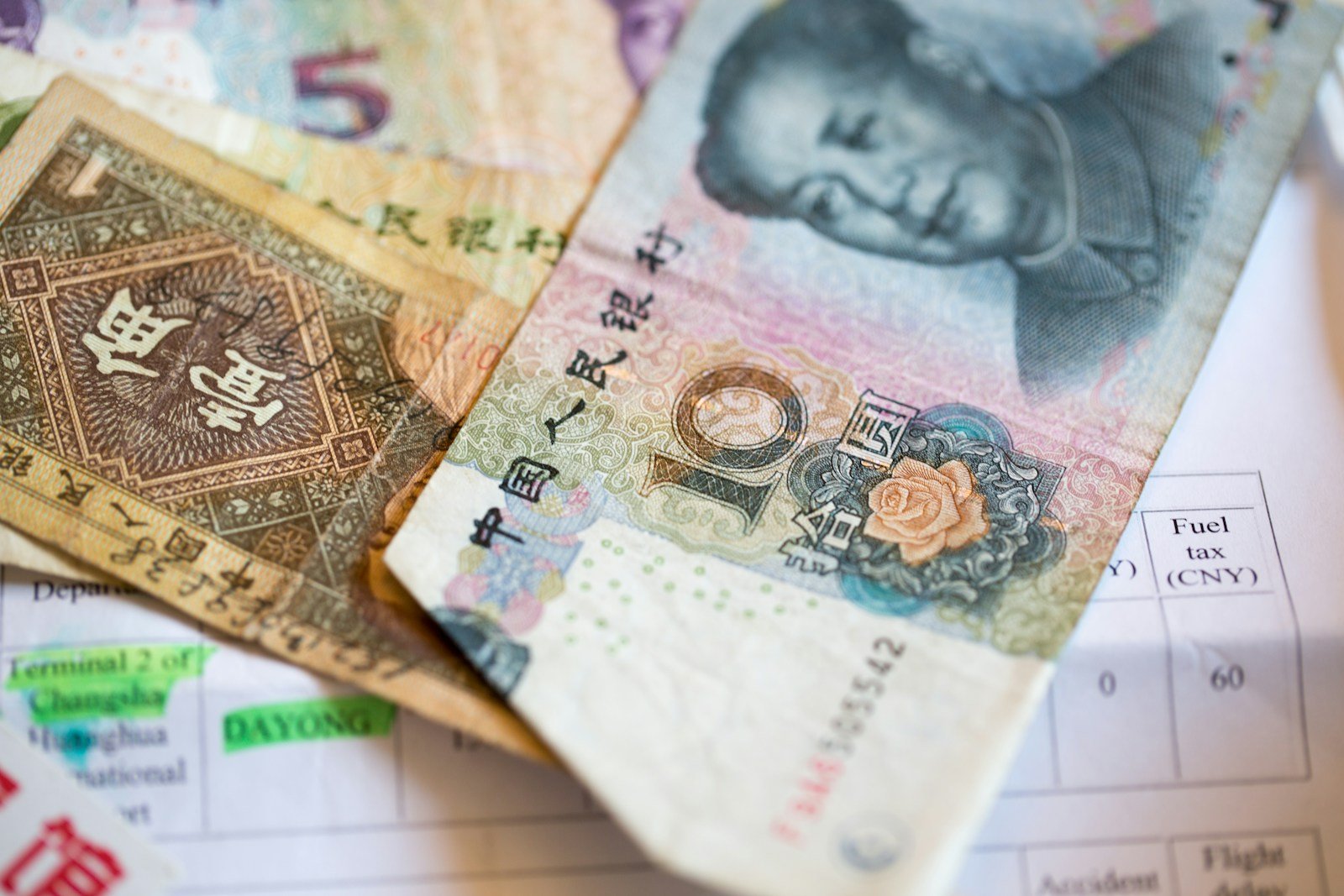
Few economic stories get misread as often as China’s. Read one headline and the country looks like an unstoppable manufacturing superpower. Read the next and it looks like an economy stuck in a property slump with shoppers who won’t spend. Both pictures are accurate at the same time, and that tension is the real story.
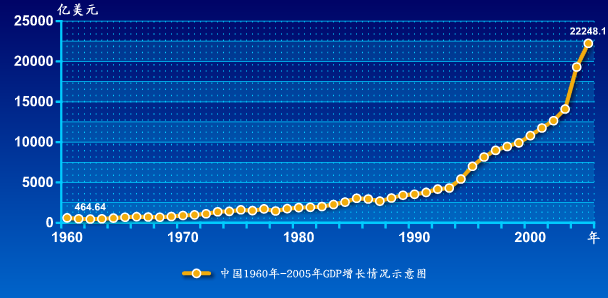
China is a roughly $20 trillion economy and the world’s second largest. It is still growing faster than almost every other major economy, but the way it grows is changing. This article looks at how that growth is being produced, what the numbers say, and where the weak spots are.
The Big Picture: Slower, But Still Big
China hit its official growth target of 5% in 2025, even after a year of tariff battles with Washington. For 2026, Beijing set a lower goal of 4.5% to 5%. Officials said that pace would still rank among the highest for major economies. Critics noted it is the most modest target in decades.
The lower number is deliberate. It signals a shift toward what Beijing calls high-quality growth, built on advanced industries and structural reform rather than the old drivers of construction and exports. The long-term anchor is a promise to double 2020 per capita GDP by 2035, which would put China at the level of a moderately developed country. Officials chose not to lock in yearly targets across the whole plan period, so they can adjust as conditions change.
The actual numbers so far are a little softer than the targets. Growth slowed to 4.3% in the second quarter, the weakest pace in over three years. Authorities have mostly avoided big stimulus, preferring small policy adjustments while foreign demand does the heavy lifting.
Engine One: Making Things and Selling Them to Everyone
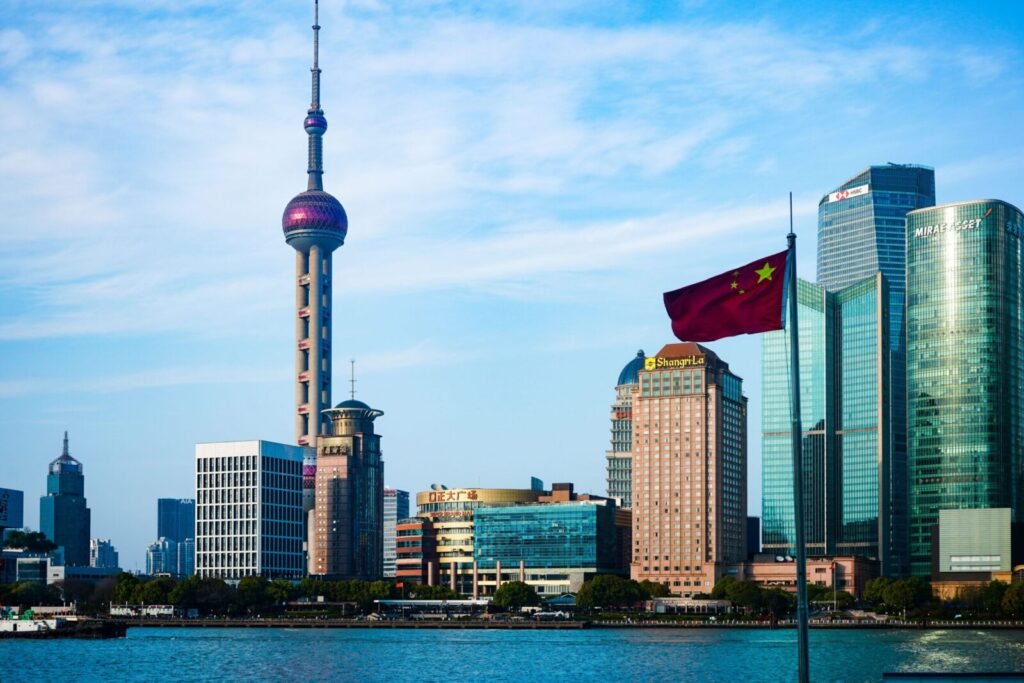
The most reliable engine is still manufacturing and trade. In 2025 China’s exports rose 5.5% to $3.77 trillion while imports stayed flat at $2.58 trillion. The result was a record trade surplus of about $1.19 trillion, roughly the GDP of a top-20 economy like Saudi Arabia.
That happened while the United States, China’s biggest customer, was making it much harder to sell there. At one point US tariffs on most Chinese goods reached 145%, high enough to threaten a near-total halt in trade. Exports to the US fell 20% in 2025. Chinese companies simply went elsewhere. Shipments to Africa jumped 26%, Southeast Asia 13%, the European Union 8%, and Latin America 7%.
What China sells is also changing. Exports of electric cars, lithium batteries, and solar panels grew by more than a quarter in 2025, and industrial equipment and robots grew by 13%. This is no longer a story about cheap toys and T-shirts. The products that struggled were the ones most dependent on American buyers, like toys, furniture, and footwear.
The momentum has continued into 2026. In August, exports of mechanical and electrical products rose nearly 22%, and industrial output grew 5.2%, beating forecasts. BNP Paribas’s chief China economist said it expects exports to remain the main growth driver this year.
The downside is that a surplus this large makes other countries nervous. Reuters noted that the record numbers risk further unsettling economies worried about Chinese overcapacity and dependence on Chinese products.
Engine Two: Technology, AI, and the EV Boom
The second engine is technology, and here China has gotten lucky with timing. The global AI investment boom has lifted demand for Chinese semiconductors and tech hardware. In July, output of electronic equipment rose more than 19% from a year earlier. Value added in high-tech manufacturing has been growing at 13.8%, more than double the pace of industry overall, led by 3D printing, batteries, and robotics.
Beijing is trying to lock this in. The 15th Five-Year Plan calls for national R&D spending to rise by at least 7% a year and for core digital industries to reach 12.5% of GDP. It also targets a 17% cut in carbon dioxide emissions per unit of GDP between 2026 and 2030. The plan lists 109 major projects across six areas, from new productive forces to public well-being.
Electric vehicles show both the promise and the problem. BYD exported about 1.05 million vehicles in 2025, up roughly 150% from the year before. In the first half of 2026, more than half of its revenue, about 53%, came from outside China. In August, BYD sold 433,384 passenger cars and exported 188,746 of them. Chery, meanwhile, sold about 70% of its cars abroad. Companies are also building factories in Thailand, Uzbekistan, and Brazil, with a Hungarian plant expected to start assembly late this year.
Why the rush abroad? Partly because the home market is crowded. One industry analysis estimates Chinese factories can build about 55.5 million vehicles a year against domestic sales of around 23 million. Treat that figure as a rough estimate, but the direction is clear: exports absorb the excess, and price wars at home have squeezed profits.
Engine Three: Planning and Patience
China’s third advantage is less flashy. The country has been running five-year plans since 1953, and the 15th (2026 to 2030) is the latest in a long line. Whatever you think of central planning, it gives Beijing a way to point money and talent at chosen sectors for years at a time.
The government is also learning to correct its own excesses. Policymakers have launched what they call an “anti-involution” campaign, a push against the ruinous price competition that shrinks margins and feeds deflation. The idea is to reward quality and profitability over sheer volume.
Planning also showed up when the Iran war rattled energy markets. Beijing turned to domestic sources and its strategic petroleum reserve to cushion the blow. Chinese refiners have been picking up much of the crude still moving through the Strait of Hormuz, and China’s refined fuel exports rose 12.7% in August, with jet fuel exports hitting a record.
The Trade War Reset
Relations with Washington deserve their own mention, because they shape almost everything else. After the tariff escalation of 2025, the two sides agreed in October to a one-year truce. The US cut fentanyl-related tariffs by 10 percentage points and put off an extra 100% tariff. In May 2026, President Trump made a state visit to China, the first by a US president since 2017. According to Beijing’s commerce ministry, Washington committed to keeping tariffs at or below the truce levels.
Calm is not the same as resolution. The US is still rolling out new tariffs tied to concerns about forced labor and excess manufacturing capacity. Businesses on both sides are planning for a relationship that could turn sour again.
The Cracks: Property, Spending, and Prices
Now for the harder part. China’s growth is lopsided, and the imbalance shows in almost every domestic number.
Start with property, once a huge share of the economy. New home prices have now fallen for four straight years and sit about 12.1% below their 2021 peak, according to Morgan Stanley. In February 2026, new home prices across 70 cities were down 3.2% from a year earlier. From January through August, real estate development investment fell 19.9%, and overall fixed-asset investment dropped 7.2%. Beijing has responded with steps like buying unsold homes and converting them to subsidized housing, but so far the slide hasn’t stopped.
Then there are households. August retail sales rose just 0.4% from a year earlier, missing forecasts. Urban unemployment ticked up to 5.3%. Consumer prices rose only 0.8%, with core prices up 1.0%, which shows how weak demand is. People are spending more on services, up 5.0% so far this year, than on goods, up just 1.1%, but the totals remain modest. When people worry about job security and the value of their homes, they save.
So China has factories humming and shoppers holding back. Analysts say Beijing is unlikely to launch big stimulus as long as exports keep growth within the target range. That may be comfortable for policymakers, but it leaves the underlying imbalance in place.
Not everyone is gloomy. A researcher at the State Council’s Development Research Center argued that China’s real growth potential is around 8% if domestic demand were fully unlocked. That is an optimistic official view, but it points to what’s at stake in getting consumers to spend.
Key Facts at a Glance
- Size: roughly $20 trillion, second in the world by nominal GDP.
- 2026 target: 4.5% to 5%, with second-quarter growth at 4.3%.
- 2025 trade: exports of $3.77 trillion and a record $1.19 trillion surplus.
- Export shift: US-bound shipments fell 20% while Africa rose 26% and Southeast Asia 13%.
- Tech push: high-tech manufacturing growing at 13.8%, with R&D spending set to rise at least 7% a year.
- EVs: BYD earned 53% of first-half 2026 revenue overseas.
- Weak spots: property investment down 19.9%, retail sales up only 0.4%, consumer prices up 0.8%.
What Happens Next
The near-term outlook depends on three things. First, whether global demand for AI hardware holds up, since it is currently propping up Chinese exports. Second, whether the US-China truce survives new tariff fights and geopolitical shocks, including the disruption to energy markets from the Middle East war. Third, whether Beijing eventually decides that supporting household spending is worth the cost.
None of these is guaranteed. If AI spending cools or tariffs return, an export-led model looks more fragile than the current numbers suggest. If Beijing does find a way to lift consumption and stabilize housing, China could grow at a healthier pace for years.
The Bottom Line
China is growing by doing what it does best: building things at scale, selling them to whoever will buy, and pouring resources into strategic technology. It is doing that at a slower pace than in the past, and at the cost of a weak property market and cautious consumers. The headline growth rate is respectable, but the mix behind it is what deserves attention.
Any honest summary has to hold both truths at once. China is not collapsing, and it is not invincible. It is an economy in transition, still figuring out how to grow when the old engines have run out of road.
Figures are current as of September 20, 2026, and some sources are industry estimates, so double-check key numbers before you publish. I can also trim this to an exact 2,000 words, put it in a file, or tune the tone for your audience.